Drawing on the professional insights of Dr. Zafar Rasheed, Laboratory Trainer at LTT.
Can someone returning to study after several years learn alongside a student who has recently finished school?
Of course. And in a laboratory classroom, their different experiences can create valuable opportunities to learn from one another.
Some students begin their training with a strong understanding of science. Others bring practical workplace experience, an interest in laboratory testing or the motivation to explore a new career direction.
While their backgrounds may be different, they often share a similar goal: developing practical skills they can apply in laboratory environments.
Choosing a laboratory technician course is about more than learning scientific concepts. It also involves understanding laboratory procedures, practising technical skills and learning why accuracy, safety and quality matter.
At LTT, trainers recognise that students bring different experiences and learning needs into the classroom. Through practical activities, guidance and competency-based learning, students have opportunities to build on their existing knowledge while developing new capabilities.
Drawing on the insights of LTT Laboratory Trainer Dr. Zafar Rasheed, we explore how inclusive teaching approaches can support students as they work towards developing skills relevant to laboratory workplaces.
Different Backgrounds Can Bring Valuable Perspectives
Imagine two students working together on a laboratory activity.
One understands scientific terminology and calculations but has limited experience using laboratory equipment. The other is familiar with workplace procedures but needs additional support connecting those procedures with scientific theory.
Both bring something valuable to the activity.
By working together, they can exchange ideas, ask questions and learn from different perspectives.
These interactions can also help students practise communication, teamwork and problem solving, skills that are important in laboratory environments.
At LTT, trainers consider students’ previous knowledge and experience when introducing new concepts and practical tasks.
Rather than expecting everyone to approach learning in the same way, trainers use different teaching methods to support students in developing the skills and knowledge required by their qualifications.
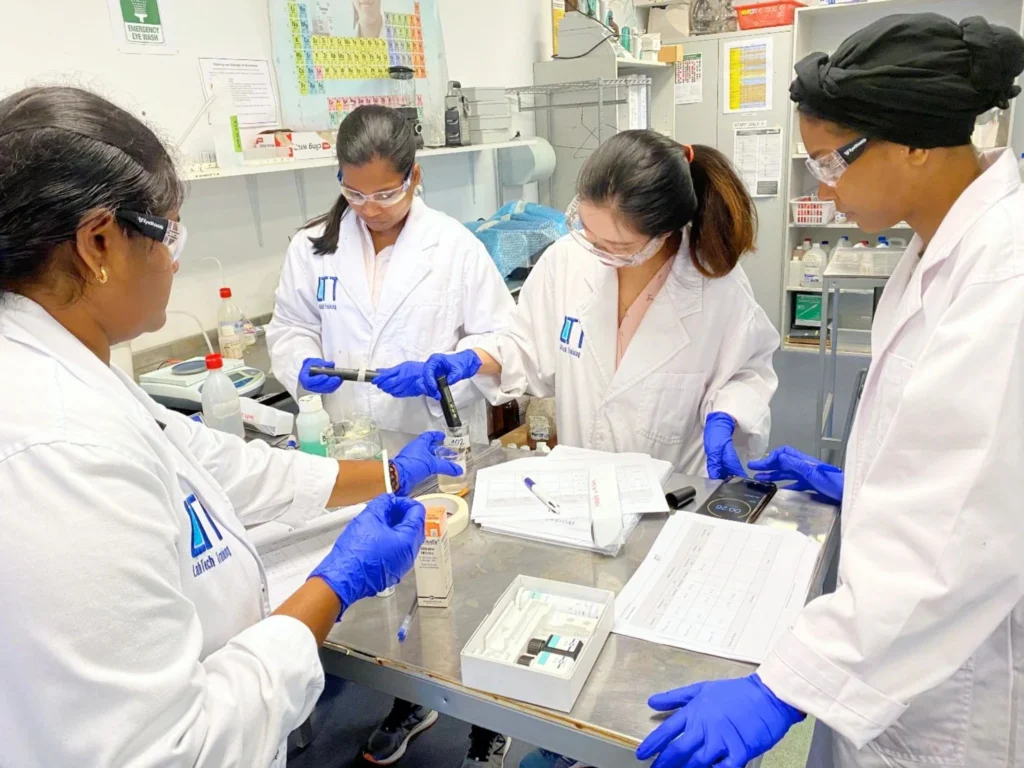
Different experiences, shared learning. Practical activities give LTT students opportunities to collaborate, exchange ideas and develop laboratory skills.
Why One Teaching Approach Doesn’t Work for Everyone
Dr. Zafar Rasheed’s insights into laboratory education highlight an important consideration: students do not all learn in the same way.
As he observes in his research:
“There is not a universal approach that works for the whole class.”
This observation reflects the importance of recognising different learning needs while maintaining consistent training and assessment standards.
For example, some students may understand a procedure after hearing an explanation. Others may benefit from watching a demonstration, discussing the steps or practising the task themselves.
Consider learning how to measure and prepare a laboratory sample.
Students need to understand the procedure, select appropriate equipment, follow safety requirements and record their work accurately.
A clear explanation introduces the task. A demonstration shows how it is performed. Practical activities then provide opportunities for students to apply what they have learned.
At LTT, trainers use these approaches alongside guidance and constructive feedback to help students strengthen their understanding and practical abilities.
Making Technical Learning Easier to Understand
Laboratory training introduces students to scientific terminology, calculations, equipment, safety procedures and documentation requirements.
For someone entering the field for the first time, these can be unfamiliar.
Trainers help make technical concepts more accessible by connecting explanations with practical examples.
A student learning about measurement accuracy, for instance, can explore why selecting suitable equipment and recording results correctly are important.
By connecting theory with practical activities, students can better understand how individual tasks contribute to reliable laboratory work.
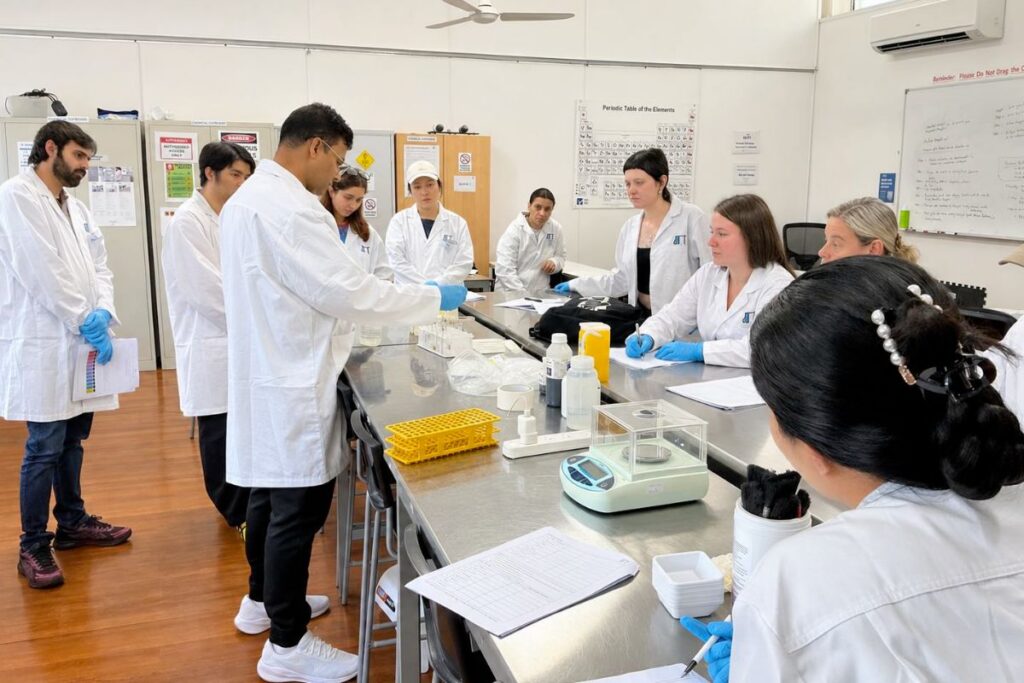
Dr. Zafar Rasheed connects technical knowledge with practical demonstrations and guidance to support students as they develop new skills.
From Classroom Knowledge to Practical Laboratory Skills
essential part of laboratory training.
A laboratory technician may be required to prepare samples, use testing equipment, follow documented procedures and record results.
Each activity involves a combination of technical knowledge and practical ability.
Through laboratory activities, students have opportunities to practise relevant procedures, become familiar with equipment and understand the importance of following instructions.
For example, preparing a sample may involve several steps, from selecting the appropriate materials to checking measurements and documenting the work.
Students can explore why each step matters and how errors may affect the reliability of results.
At LTT, trainers provide guidance and feedback throughout practical learning activities, helping students recognise areas for improvement and develop their capabilities.
What Is Competency Based Training?
Competency based training is a key feature of Australia’s vocational education and training system.
It focuses on developing and assessing the skills and knowledge required to perform tasks to the standards specified in a qualification.
Rather than relying solely on written knowledge, competency-based assessment requires students to demonstrate that they can meet the relevant requirements.
In laboratory training, this may involve demonstrating skills such as:
- Following laboratory safety procedures.
- Preparing and handling samples appropriately.
- Selecting and using laboratory equipment.
- Performing procedures according to instructions.
- Recording observations and results accurately.
- Applying relevant quality requirements.
These activities help connect scientific knowledge with the practical expectations of laboratory work.
For students undertaking MSL40122 Certificate IV in Laboratory Techniques, competency-based training supports the development and demonstration of skills and knowledge specified by the qualification.
Students participate in learning activities and practical exercises, then complete assessments against the relevant competency requirements.
Trainer feedback can help them understand their progress and identify areas where further development is needed.
Why Does This Matter in a Laboratory Workplace?
Accuracy and consistency are important in laboratory environments.
A measurement recorded incorrectly, an instruction overlooked or a procedure performed inconsistently can affect the quality of laboratory work.
This is why training places importance on understanding procedures as well as performing them.
By practising relevant tasks and receiving feedback, students can develop a clearer understanding of the responsibilities involved in laboratory work.
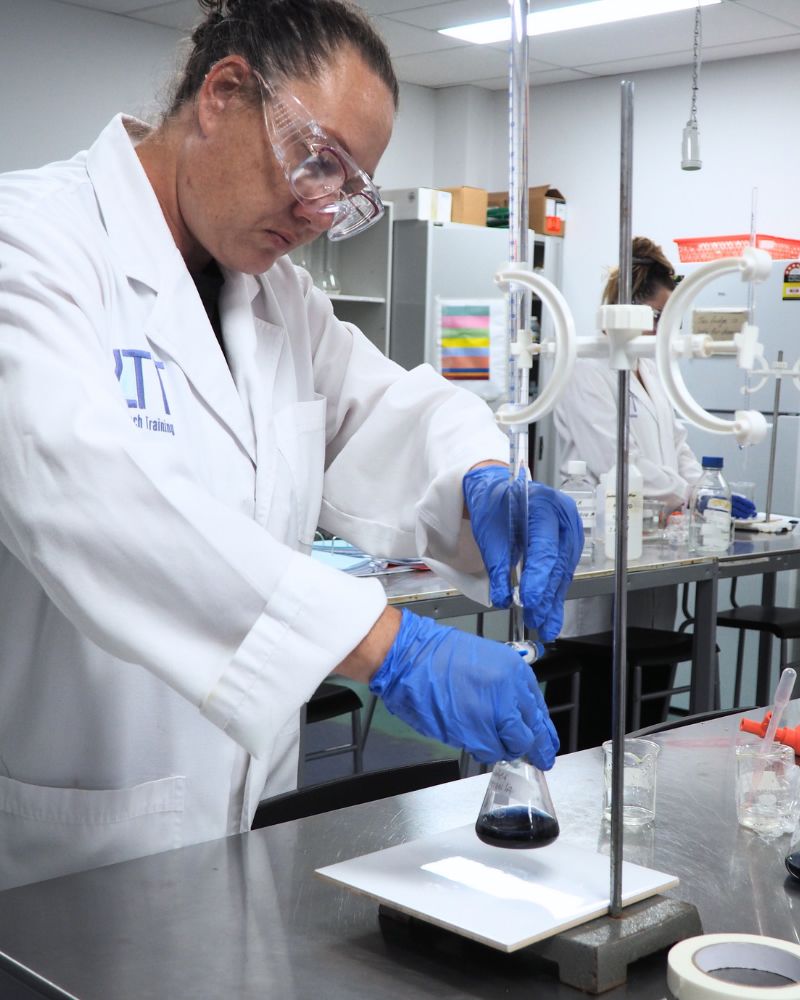
Practical laboratory activities help students connect scientific knowledge with technical procedures, safety requirements and accurate documentation.
Building Confidence Through Practice and Feedback
Learning a new laboratory technique can feel unfamiliar at first.
A student may understand the theory but need additional practice using equipment. Another may feel comfortable performing a procedure but benefit from revisiting the scientific principles behind it.
These differences are a normal part of learning.
At LTT, trainers recognise that students may require different forms of guidance as they develop their skills.
Through demonstrations, practical activities and constructive feedback, students have opportunities to ask questions, revisit concepts and improve their understanding.
Collaborative activities also encourage students to communicate their ideas and learn from others.
Over time, these experiences can help students become more familiar with laboratory procedures and more confident in applying their knowledge.
Developing Skills Relevant to Laboratory Technician Roles
Working as a laboratory technician involves more than operating equipment or performing individual tests.
Depending on the workplace and industry, laboratory personnel may need to prepare samples, follow technical procedures, maintain accurate records and apply safety and quality requirements.
Communication, organisation, attention to detail and teamwork can also be important.
At LTT, practical learning activities help students understand how technical and professional skills work together.
For example, accurately recording a test result involves more than writing down a number. Students also need to understand the procedure, follow instructions and recognise the importance of clear documentation.
These learning experiences help students develop an understanding of expectations they may encounter in laboratory workplaces.
For students exploring a laboratory technician course, LTT’s MSL40122 Certificate IV in Laboratory Techniques provides an opportunity to develop technical knowledge and practical skills relevant to laboratory environments. Explore our course information and training options in Queensland and Western Australia!
Whether students are entering laboratory training for the first time or building on previous experience, these skills can form an important part of their professional development.
Your Experience Matters. Your Next Step Starts Here.
There is no single background that every laboratory student must share.
Some people are interested in science and laboratory testing. Others are returning to study, exploring new career directions or looking to develop additional technical skills.
Dr. Zafar’s insights highlight the value of recognising these different experiences and adapting teaching approaches to support learning.
At LTT, trainers aim to create opportunities for students to learn, practise and develop their capabilities through practical activities and competency-based training.
These approaches reflect LTT’s commitment to providing real learning for students and value for industry.
Different backgrounds. Different experiences. Shared opportunities to learn and grow.
Explore Laboratory Training with LTT
Interested in developing practical laboratory skills?
LTT offers MSL40122 Certificate IV in Laboratory Techniques, a nationally recognised qualification designed to develop technical knowledge and practical skills relevant to laboratory environments.
Explore the course information for your location:
- Certificate IV in Laboratory Techniques in Queensland
- Certificate IV in Laboratory Techniques in Western Australia
Course availability, delivery arrangements and eligibility requirements may vary by location.
Whether you’re exploring a new career direction or building on your existing experience, LTT can help you learn more about your training options.
Ready to explore your next step?
Visit www.ltt.edu.au or call 1300 588 588 to learn more about laboratory training.