Listen to Asad Khan’s interview with Dr Danielle Johnston, courtesy of Ngaarda Media:
“This training merged traditional fishing knowledge with Western scientific methods. The rangers’ enthusiasm and insight enriched the research process.”
– Dr Danielle Johnston, Senior Research Scientist, DPIRD
Snapshot
Client: Karajarri Traditional Lands Association (Marine and Land Management, Bidyadanga Community, WA)
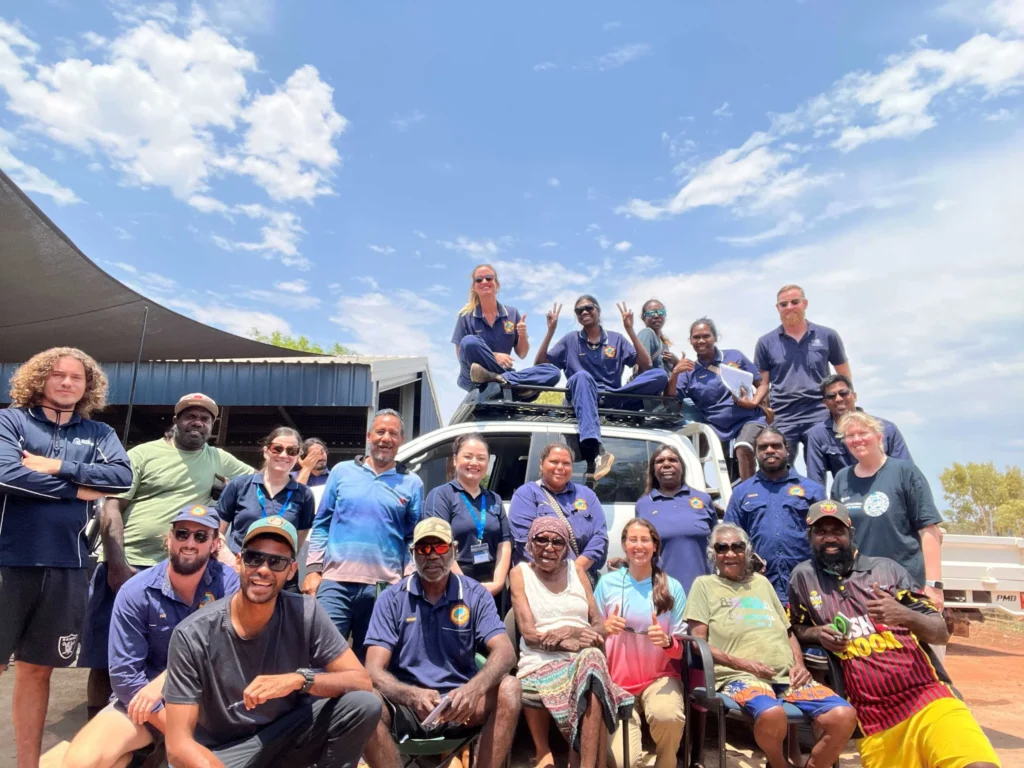
Cohort: 20 Karajarri Rangers – Indigenous rangers and sea country leaders
Time-to-value: 4 days
Top KPIs: Knowledge transfer between Aboriginal and Western sciences; marine research competencies accredited; sustainable fishery strategy alignment
The Challenge
For generations, the Karajarri people have been custodians of their coastal waters in Western Australia’s Kimberley region. Yet despite deep ecological knowledge and a strong connection to Country, barriers existed to participating in-and leading-commercial marine enterprises.
With more than 90% of the Kimberley under Native Title, Traditional Owners sought pathways to take stewardship a step further: building the research and technical capacity needed to operate a sustainable, community-owned mud crab fishery. Without accredited training or scientific data collection experience, opportunities for commercial licences and fisheries management remained largely out of reach.
The challenge was to bridge traditional fishing mastery with modern research standards so the Karajarri Rangers could become industry-ready scientists on their own terms.
Why LTT
LTT was chosen for its proven record in community-led, industry-recognised training across remote Australia. With flexible delivery, on-the-field field instruction, and experienced trainers embedded in industry, LTT programs are designed to meet learners where they are-literally and professionally.
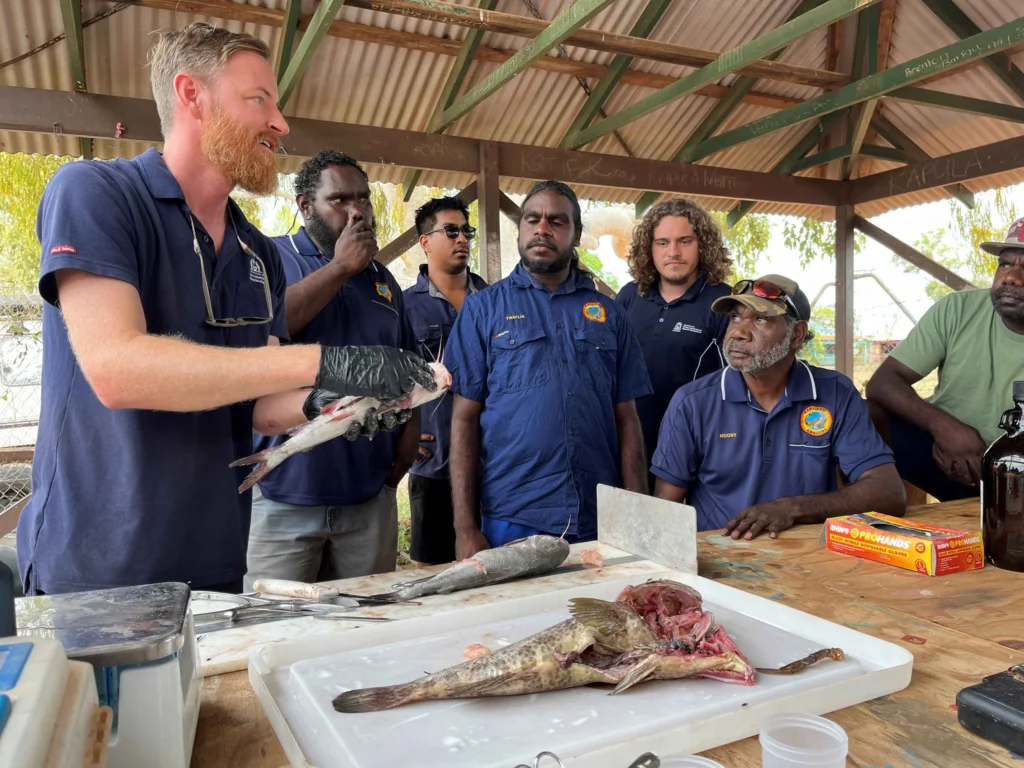
In collaboration with the Department of Primary Industries and Regional Development (DPIRD), LTT delivered a contextualised, hands-on workshop that respected cultural knowledge while aligning with national vocational standards. This ensured each ranger could gain meaningful, accredited skills that would contribute to long-term employment, environmental monitoring, and fishery development.
What We Delivered
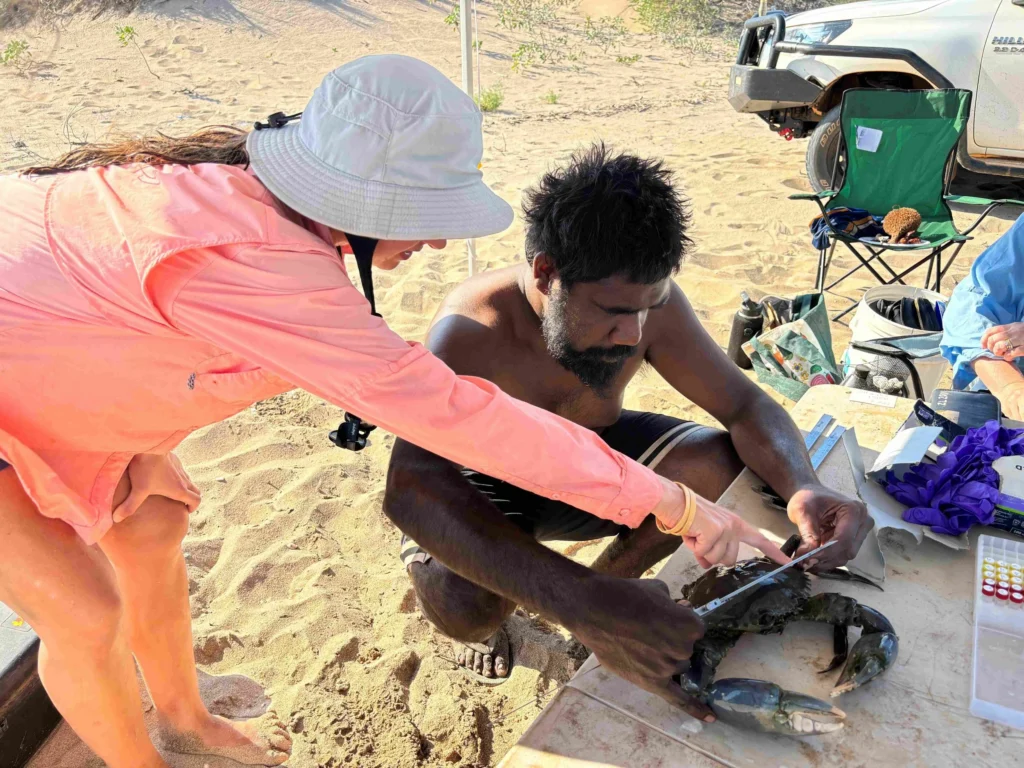
- Facilitated on-the-field training workshops at Bidyadanga, integrating Indigenous knowledge with marine science techniques.
- Designed and implemented field-based modules on species identification, crab trapping, morphometric measurement, and water-quality testing.
- Issued Certificates of Completion in Mud Crab and Finfish Training, enabling pathway progression toward formal fisheries research qualifications.
Results
- Knowledge exchange: Traditional ecological knowledge integrated with contemporary scientific methods within one training cycle.
- Competency uplift: 100% of participants achieved competency in field survey design, data collection, and species analysis within four days.
- Community capacity: Foundations established for an Aboriginal-owned mud crab fishery led by Karajarri Rangers.
- Partnership outcomes: Successful joint delivery between LTT, DPIRD, and the Karajarri Traditional Lands Association.
- People impact: 95% participant satisfaction and strong local interest in future fisheries certification programs.
| Metric | Before | After | When |
| Accredited marine research training | None | 20 Certificates of Completion issued | January 2025 |
| Data collection capability | Informal | Structured, scientifically aligned | Post-training |
| Community-led fisheries planning | Emerging concept | Active program proposal | 2025 Q1 |
What’s Next
Building on the success of Bidyadanga, LTT and DPIRD aim to expand hands-on research and fisheries management training to other coastal Traditional Owner groups across the Kimberley. Planned refreshers and advanced modules will support local champions in leading the region’s next generation of Aboriginal-managed fisheries.